
The Six-Month Pivot: Why Your AI Problem Isn’t Technical — October 11, 2025

The Six-Month Pivot: Why Your AI Problem Isn’t Technical

Let’s begin with a story.

Sarah, a talented Product Manager, spent years refining the art of the perfect PRD. Her reputation lived in the precision of her “how”—the rigorous, detail-driven playbook for shipping new products. But earlier this year, as AI tools crept deeper into her daily work, Sarah grew anxious. If a machine can generate specs, what’s left for me? she wondered.

Her breakthrough wasn’t in mastering a new algorithm or coding technique—it was in reframing her own role. Sarah realized her superpower wasn’t technical. The real gap was in her imagination.

AI Doesn’t Replace You—It Catapults The Human Who Learns To Lead It

The perceived threat of AI isn’t mechanistic displacement—it’s evolutionary acceleration. The new professional isn’t measured by typing speed or routine data synthesis. The new advantage: orchestrating and composing the power of AI into outcomes that reflect original, deeply human insight. You’re not the diligent scribe now. You’re the strategist—the conductor of a symphony that AI can amplify.


1. From “How” to “What”—Redefining Professional Value

For business leaders at every level, the true shift is not about execution, but orchestration.

  • The Developer’s Leap: Three weeks to build out boilerplate code? Now, it’s three days with AI-assisted generation. And those saved days become the launchpad for new innovation, new features—new ambition every single month.
  • The Marketer’s Edge: Instead of slogging through 50 ad copy variants over two days, they can now cycle through 500 testable options in a single afternoon. The focus elevates from brute-force production to extracting deep psychological signals—the “what” rather than the “how.”
  • The Product Manager’s New Frontier: Your existential challenge isn’t operational excellence—it’s zero-to-one thinking. Your value is in naming the strategic, unsolved problem that truly demands machine intelligence. If a legacy query or rules engine suffices, deploying AI costs more than it’s worth. The modern Product Manager isn’t the executor; they’re the strategist—the architect of value, not overhead.

2. Measure Real Impact, Not Just Technical Perfection

Imagination failure often lurks in how we define success.

  • For years, Sarah tracked model accuracy—99% precision, technical mastery. Yet company revenue stayed flat. Why? Because technical elegance alone doesn’t guarantee business impact.
  • The pivot: Value-Realization Metrics. Sarah abandoned “accuracy obsession” for actionable metrics—like a 15% boost in customer retention driven by an AI personalization feature. Her genius wasn’t code optimization; it was connecting model output to financial outcomes, moving the revenue needle and demonstrating tangible value.

Success in the AI era demands metrics that tie technology to outcomes—not just outputs. Trade complexity for clarity. Elevate measurement from technical benchmarks to economic impact.


3. The Six-Month Urgency—and Why It Matters

India today boasts 9 million tech professionals—the globe’s richest pool of digital talent. But possessing raw capacity isn’t enough. The real challenge is converting scale into urgency.

The skills that built yesterday’s career—micro-managing the backlog, technical depth in siloed stacks—will not fuel tomorrow’s breakthroughs. The difference between you and the next 10x performer? Imagination—the ability to envision, design, and activate new workflows powered by AI.

Your next six months matter more than your last six years.

AI upskilling is no longer optional—it’s existential. The pace of transformation isn’t slowing for anyone. Look at your goals for the next quarter. Review your calendar for upcoming milestones. Ask Sarah’s new question:

“Am I treating AI upskilling as optional, or as my survival strategy?”


Embrace the pivot. Orchestrate the future. The only limits now are the ones imposed by your own imagination.

The Zero-to-One AI Product Playbook: Problem-First Innovation — October 8, 2025

The Zero-to-One AI Product Playbook: Problem-First Innovation

The biggest mistake in AI product development is precisely building a model looking for a problem. This approach, often fueled by excitement over a new technology or dataset, inverts the core principles of successful product management and is the fastest route to a failed deployment.

The Imperative: Start with the Zero-to-One User Problem

Successful AI products, like any transformative product, must begin with the zero-to-one user problem. This means identifying a pain point that is currently unsolved, inefficiently solved, or has significant potential for exponential improvement.

1. Define the User & Pain Point

The first step is Design Thinking: deeply understanding the user, their context, and the friction they face.

  • “What is the job to be done?” Focus on the user’s need, not the feature you could build.
  • “Is this problem worth solving?” The pain must be severe or the opportunity large enough to justify the complexity and cost of an AI solution.

2. Is AI the Minimum Viable Solution (MVS)?

Once the problem is validated, the question becomes: Is AI the best way to solve it?

  • Often, the simplest solution (a rules-engine, better filtering, or clearer UX) is sufficient.
  • Only when the desired solution requires prediction, personalization, content generation, or optimization at scale—tasks only possible with machine learning—should AI be introduced. AI/GenAI should be the differentiator or the enabler that makes the solution magical or impossible otherwise.

3. Product-Market Fit vs. Model-Data Fit

A successful product requires Product-Market Fit (PMF), which means the model’s output must deliver value that users will pay for or adopt widely.

GoalMistake: Model-First ApproachSuccess: Problem-First Approach
Starting PointAn interesting dataset or algorithm.A validated, high-value user pain point.
Success MetricModel accuracy (e.g., 95% precision).User Adoption and Business KPI (e.g., 20% faster checkout).
FocusHow the model works.How the user feels and how the business grows.

By prioritizing the zero-to-one user problem, you ensure that the advanced AI model you ultimately build serves as the powerful engine for a solution that people actually need, use, and value.

This playbook addresses the crucial shift in AI product development: moving from Model-First to Problem-First. The biggest mistake is treating AI as a solution searching for a problem; the key to successful, scaled AI is identifying a validated, zero-to-one user problem that only machine intelligence can solve.

Phase 1: Problem Validation (User-Centric Discovery)

Let’s discuss! What’s your biggest challenge in defining AI product strategy?

Creating Winning Strategies: Crafting Your Startup’s Path with Animal Metaphors — May 8, 2024

Creating Winning Strategies: Crafting Your Startup’s Path with Animal Metaphors

How do you restart your habit after a long hiatus? There was a need to attend to some important aspects of my life, which took me away from focusing on my regular work and health habits. We all go through the same thing at some point in our lives, and it’s challenging and intimidating at the same time to go out of your comfort zone and experiment with something foreign to you. Am I glad that I did that? Sure, I am satisfied, to say the least. Coming back to restarting my old regular routines, one of them was to go on a regular morning walk after dropping my son off at school. The refreshing morning air is all you need to kickstart your day with positive enthusiasm. I have also started meditating, and there is this concept of “Drashta”  which powerfully tells you to be an observer of your thoughts, actions, and surrounding dramas 🙂. That’s what led me to pen this blog post.

Unraveling Startup Personalities in Nature’s Embrace

My morning walks in the park are a delightful blend of diverse people and activities, all set against the backdrop of abundant nature and a symphony of birdsong. During these outings, my partner and I often engage in thought-provoking conversations, drawing inspiration from our surroundings. Recently, our discussion turned to the intriguing archetypes of crow and peacock startups.

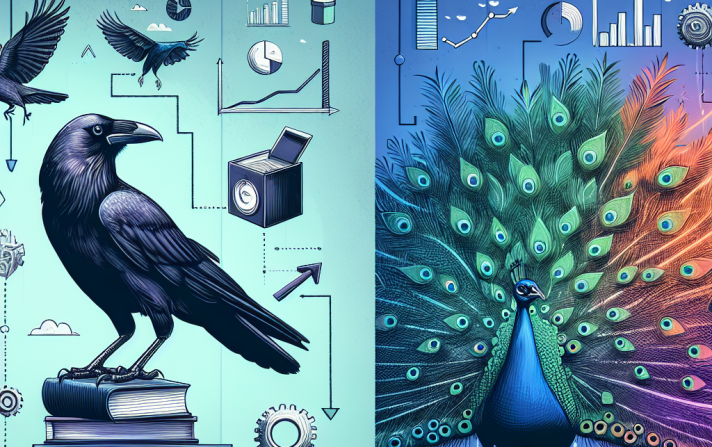
While we’re familiar with the concept of cockroach startups—characterized by resilience and an unrelenting drive to survive—we pondered the qualities of crow and peacock businesses. The crow, often overlooked and considered plain, symbolizes understated, quiet innovators in the entrepreneurial world. These startups prioritize practicality, intelligence, and collaboration over flashiness and showmanship.

On the other hand, the peacock, known for its brilliant plumage and captivating presence, represents businesses that thrive on attention and spectacle. Peacock startups attract investors with their dazzling potential and storytelling prowess, their colorful narratives capturing the imagination of all who listen.
As we strolled among the chirping birds, cawing crows, and calling peacocks, we couldn’t help but appreciate the parallels between nature’s diverse creatures and the dynamic world of entrepreneurship. The park’s rich tapestry of life and activity provided the perfect setting for our discussion on the complexities and hidden potential within the startup ecosystem.

Defining Crow and Peacock Startups

Crow Startups: A unique breed of businesses, the name Crow Startups draws inspiration from the intelligent and social nature of crows, that excel in collaboration and problem-solving. These startups leverage the power of collective intelligence, community collaboration, and decentralized decision-making to propel innovation and value creation.  Crow Startups excel in environments that promote unity and collaboration. They leverage the power of diverse perspectives and expertise to drive innovation and solve complex problems. LinkedIn/Twitter/Reddit and such social communities provide an ideal platform for these startups to expand their collaborative reach and drive progress through collective effort. 

Crow startups excel in industries and markets where collaboration, openness, and collective intelligence are valued.

A great example of a Crow startup that I followed through on its journey is Postman. Postman’s journey started with the founder’s mission to simplify API testing processes, which required a collective effort from a team of skilled professionals. The platform’s growth and success are a testament to the power of collaboration and the importance of addressing complex challenges through teamwork and shared expertise.

Peacock Startups: Inspired by the dazzling and unique peacock, these startups adopt the bird’s striking characteristics and creative flair. Rather than prioritizing collaboration like crow startups, peacock startups emphasize innovation, differentiation, and style, aiming to capture the attention of customers, investors, and stakeholders. Bold branding, imaginative design, and persuasive storytelling lie at the heart of peacock startups’ strategies, setting them apart in a world where aesthetics, brand identity, and user experience often dictate consumer choices. 

Peacock startups thrive in markets where aesthetics, branding, and user experience are critical drivers of success.  

Take, for instance, Apple, a prime example of a peacock startup. With its sleek designs and powerful branding, the tech giant has managed to create a legion of loyal customers who eagerly await each new product release. Similarly, Nike’s iconic swoosh logo and powerful advertising campaigns have made it a symbol of innovation and style in the world of sports apparel.

The stories of these companies reveal that there’s no one-size-fits-all approach to success. Both peacock and crow startups have their own unique strengths and can excel in different environments. The key is to recognize your business’s core competencies and adopt strategies that align with your strengths and values.

A hybrid approach that combines elements of both peacock and crow startups can indeed work for some businesses. In fact, incorporating aspects of both strategies may offer a more well-rounded and adaptable approach to achieving success. 

A great example of a hybrid startup that combines elements of both peacock and crow models is Airbnb which has managed to revolutionize the travel industry. Here’s how Airbnb blends these approaches:

Peacock Startup Traits: Airbnb boasts a strong brand identity, offering unique and memorable experiences for its customers. Its user-friendly platform and visually appealing design make it easy for users to search and book accommodations, showcasing the company’s commitment to aesthetics and innovation.

Crow Startup Traits: Airbnb also relies heavily on community engagement, encouraging hosts and guests to collaborate and build trust through reviews, ratings, and shared experiences. This collective intelligence helps ensure the platform’s safety and reliability, fostering a sense of community and collaboration.

Conclusion

In the ever-evolving lexicon of startup animal metaphors, crow and peacock startups offer valuable insights into the diverse strategies and philosophies embraced by founders. While Crow startups prioritize community collaboration, open innovation, and collective intelligence, Peacock startups emphasize distinctive branding, creative innovation, and bold risk-taking. By understanding the defining characteristics, strategic implications, and implications for the success of Crow and Peacock startups, founders can better navigate the complexities of the startup kingdom and chart a course for sustainable growth and success.

References:

1. Hill, L. A., & Westbrook, D. (1997). *Swimming with the Sharks: Creating a Winning Strategy in Business and in Life*. Warner Books.

2. Porter, M. E. (2008). *The Five Competitive Forces That Shape Strategy*. Harvard Business Review.

3. Kim, W. C., & Mauborgne, R. (2005). *Blue Ocean Strategy: How to Create Uncontested Market Space and Make Competition Irrelevant*. Harvard Business Review Press.

The Age of Efficiency — February 16, 2024

The Age of Efficiency

Efficiency is a fundamental principle that drives the success of businesses in a competitive market. In fact, the survival of a business often hinges on its ability to minimize waste, optimize processes, and maximize returns. The notion of efficiency has become an increasingly prevalent theme in today’s business landscape. The pressure to be leaner, smarter, and more effective in the use of resources has led to a renewed focus on efficiency across industries. This drive for efficiency, while necessary for survival in a dynamic market environment, has also had significant ramifications for workers, companies, and the economy as a whole.

Despite their continued expansion and growth, both Meta and Alphabet have struggled to translate their increased revenue into proportional scaling effects. While their revenue numbers continue to grow, their profit margins have remained stagnant or even declined in some cases.  The recent spate of layoffs and workforce downsizing at these tech giants is a stark departure from the previous trend of relentless hiring. The earlier pattern of “more revenue equals more personnel” seems to have reached its limits, as these companies are now realizing that hiring more people is not always the best way to drive efficiency and profitability.

In fact, the recent workforce reductions are indicative of a fundamental shift in the way these tech behemoths view their operations. Faced with mounting pressure from investors and shareholders to show profitability, these companies are now realizing that they must make hard choices to remain competitive and viable.

The recent layoffs are also indicative of a broader trend in the tech industry, where companies are increasingly looking to automate and streamline their operations using technologies like AI and automation. This shift towards efficiency-driven growth is likely to continue in the coming years, as these companies strive to remain competitive in an ever-changing technological landscape.

The “Age of Efficiency” has been characterized by a ruthless quest for productivity, often manifested in layoffs, bankruptcies, and a general lack of investment appetite. This pursuit of efficiency, while necessary for survival, can have dire consequences, including reduced job security, less innovative business strategies, and reduced economic growth.

How did we get here?

The “Age of Efficiency” didn’t just happen overnight. It’s the culmination of a series of developments that have been taking place for decades.  Despite the tech industry’s reputation for efficiency, the reality is that many tech companies are just as susceptible to inefficiencies as other industries. The difference is that the inefficiencies are often masked by the rapid pace of technological advancement and the culture of innovation that permeates the industry. The globalization of the world economy has led to increased competition from lower-cost labor markets, putting pressure on companies to cut costs and improve efficiency.

The increasing influence of financial markets on business decisions has led to a greater focus on short-term profitability, often at the expense of long-term investments in research, development, and employee development. The expectation of constant growth and profitability among publicly traded companies has led to a relentless focus on efficiency and cost-cutting measures. These factors, among others, have contributed to the current emphasis on efficiency, which has had both positive and negative impacts on businesses, workers, and the economy.

How do you adapt to “The Age of Efficiency”?

In the “Age of Efficiency,” it’s important for businesses to be fast and agile in their decision-making, and that means minimizing time spent on desk research and focusing on gathering real-world data.  In this new age, individual contributors play a critical role in shaping the future of work. They are no longer seen as mere cogs in a machine but as integral parts of the organization, whose skills, knowledge, and creativity can drive growth and efficiency. The old model of organizational hierarchies and top-down management is slowly giving way to a more decentralized, employee-centric work model, where individual contributors are empowered to drive change and innovation. A shift towards 100% work time and zero hierarchy maintenance is a significant change in the way work is done, and it can lead to a more efficient, productive, and employee-centric work environment.

In the Age of Efficiency, businesses need to prioritize experience and expertise over simply adding more heads to the team. Creating an entrepreneurial working culture is about building a diverse, high-performing team that leverages the unique strengths and contributions of each member to drive business success. Hiring experienced, skilled professionals may require higher salaries, but the efficiency gains and overall value they bring to the organization can far outweigh the costs.

The Age of Efficiency also brings with it a need for new skill sets that are critical for success in today’s rapidly changing business environment, data literacy being the foremost. With the increasing importance of data in business decision-making, employees need to be able to interpret, analyze, and communicate data effectively, employing it in their day-to-day work using tools and platforms, including social media, collaboration tools, and analytics software.
Being flexible and able to adapt to changing circumstances, technologies, and market conditions, employees need to be able to think creatively and find innovative solutions to complex business problems. By focusing on these skillsets, businesses can ensure that they have a workforce that is equipped to navigate the challenges and opportunities of the Age of Efficiency and drive growth and innovation for years to come.

From Vision to Reality: Building a Startup Studio — December 6, 2023

From Vision to Reality: Building a Startup Studio

In my recent consulting assignment, I had the opportunity to work on a playbook for building the Startup Studio ecosystem.  To begin with, it was the first kind of experience for me towards understanding this ecosystem, and I was quite excited and overwhelmed at the same time as I delved deeper into the execution of the same.

Startup Studio is a platform that focuses on early-stage startups, providing resources and guidance to help early-stage entrepreneurs who are looking to build a company from the ground up but may lack the experience, connections, or resources to do so on their own. Startup studios provide a structured environment and support system that can help entrepreneurs navigate the challenges of starting and growing a business. Startup Studio offers a space for innovation, collaboration, and the development of new ideas.

The first step toward building this ecosystem was to define the categories we wanted to go after and then define the qualifier checklist to vet the high-potential businesses and ideas. Defining the categories that a startup studio focuses on is essential to its success. It helps the studio to attract the right entrepreneurs, build a targeted network of experts, and develop relevant resources and services. 

Here are some factors to consider when choosing categories:

  1. Industry trends and market demand
  2. Expertise and experience of the studio team
  3. Alignment with the studio’s mission and values
  4. Potential for growth and scalability
  5. Availability of funding and resources

Next inline was building the elements of Startup Studio for 0-1 which was broken down into the following stages:

Education & Knowledge Transfers: Educating founders regarding business basics, market insights, ICP and operational best practices ensuring the preparedness of startups is holistic and complete.  This entailed micro detailing on assembly line kinda framework – giving step-by-step guidance and checklists to follow by these businesses to create and take action on at each stages of the business life cycle. 

This involved creating turnkey templates and SOPs for-

  • Market Fit Validation  – Customer feedback, Proof of Concept, Early Adopters
  • Strategy & Growth Plan– Business Model refinement, Roadmap, Success Metrics
  • Delivery & Execution – MVP development, Community led and Product led growth

Building Community – Further, it was equally important to build a marketplace platform wherein a diverse skills community of subject matter experts can connect and provide services to these businesses under the umbrella of startup studio. This entailed creating an engaging content platform to facilitate the creation and sharing of relevant and valuable content to attract and retain community members.

The whole process of building a startup studio venture is an exhilarating ride. Seeing the vision and strategy come to life, which is the vision of ProductStudioz.com (under which I consult Startups and SMEs), creating a unique and supportive environment for entrepreneurs, working with passionate and talented people who are all working towards a common goal, and watching the startups grow and succeed is quite satisfying. Being at the forefront of innovation and entrepreneurship..all in all, it’s a fulfilling and rewarding journey!

.